


10th anniversary newsletter of the Graphics Arts Technology Centre
 The report by Independent Ink Technologies (IIT) on The Effects of Water Hardness on the Printability of Coated Papers, Stage II, a two-part research project conducted last year on behalf of the Lithographic Institute of Australia (LIA), was published in the July edition of the Ink Maker magazine, the authoritative international industry publication.
The first part of the report The Effects of Water Hardness on Lithographic Ink Performance appeared in the October 2003 edition of the same journal. The publishers reported keen interest from its readership and more than “a few raised eyebrows” in response to the findings in the article – what one might expect when dispelling myth in favour of analytical results.
The full report was published in one document, covering all the findings from Stages I and II by the LIA in December 2003. Please contact your local LIA office if you wish to have your own copy, either on CD or hard copy.
––––––––––––––––––––––––––––––––
Accelerated Skinning Time (AST)
The AST test has been re-instituted as part of IIT’s full evaluation of Sheetfed Lithographic inks for benchmarking purposes. This is in response to requests by clients for the information it provides.
The AST test seeks to bring on and identify the skinning characteristics of the wet ink en masse by maintaining the sample at elevated temperature and monitoring regularly over a defined period. This stimulates the activities of metal catalyst driers and drying oils within the wet ink and tests the effectiveness of anti-skins and/or anti oxidants to combat the onset of ink skin formation.
Essentially for the end user, AST results give an indication of press open time and duct stability. Of course, there is no one correct result as some printers favour “overnight” inks while others do not. Where AST is particularly relevant is in batch to batch Quality Assurance checks to ensure consistency. Hence, another good reason for AST to be part of the full benchmarking exercise in the first instance.
––––––––––––––––––––––––––––––––
Newsprints ain’t newsprints, Sweetheart!
It will come as no surprise to coldset printers that the performance of newsprints with regard to ink receptivity, setting speed and the integrity of the printed result can vary markedly according to grade and/or source. During recent work conducted at IIT’s Graphic Arts Technology Centre, differences in the characteristics of the resultant prints from one grade of newsprint to another have been observed.
The implication is that inks and newsprint need to be matched for optimum on-press performance. If not, undesirable consequences may occur, e.g. excessive path roller build up, set off, marking and/or blocking in re-winds.
Inks for high speed, quality coldset printing must be well balanced for drying capability (to optimise rub resistance) versus on press stability, of course. But current indications are that fluctuations in the newsprint substrate can be more influential on the occurrence of these phenomena than fluctuations in ink. The two need to work well together.
Which makes sense when you think about it: how many times have you noticed a change in set off or marking tendencies after a reel change? It does happen. And if it is happening to you on a regular basis, IIT would like to hear from you.
––––––––––––––––––––––––––––––––
Second Impression Mottle
Definition:
Where the first printing station on a multicolour press wets the paper preventing satisfactory lay of ink on second and/or subsequent printing units, adversely affecting print quality.
This phenomenon persists in making life difficult for printers, particularly in heatset web offset. Of course, there are strategies for coping with this problem on press but it is disruptive and impacts negatively on productivity, as well as print quality.

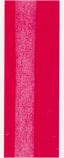
Non-mottled on left: Mottled on right
The fact is though, that it is a problem that occurs consistently with some papers and not at all with others. The challenge is to predict which are likely to experience second impression mottle and which are not.
IIT has developed a unique laboratory test method that accurately reproduces the performance of papers in the field.
Originally the technique was developed as a prerequisite to the research into the effects of hard water on the printing of coated papers, undertaken by IIT on behalf of the Lithographic Institute of Australia in 2003. It required significant modification of our Prufbau Printability Tester (pictured) in such a way that the application of water or fount occurs immediately prior to the application of ink to match the reality of press conditions. It is easy to see the resultant effects on print quality and to quantify this as percent loss of print density.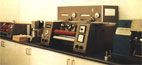
Correlation with results in the field during and after the research project proved the method a reliable predictor of a paper’s propensity to suffer second impression mottle.
You no longer have to live with this problem. IIT, your independent Graphic Arts Technology Centre, can test your paper stocks and advise practical solutions.
––––––––––––––––––––––––––––––––
The Graphics Arts Technology Centre
Newsletter is published by Independent Ink Technologies Pty Ltd,
Australia’s world-class graphic arts technology centre
If you have a print problem or require assistance with the purchase of ink, paper or press related consumables, why not call IIT for advice? IIT now helps printers, ink makers and paper companies in Europe, China, USA, Malaysia, Sri Lanka, Korea, Cyprus and Saudi Arabia.
Contact : info@inktech.com.au
Phone: 02 9683 4400
 The report by Independent Ink Technologies (IIT) on The Effects of Water Hardness on the Printability of Coated Papers, Stage II, a two-part research project conducted last year on behalf of the Lithographic Institute of Australia (LIA), was published in the July edition of the Ink Maker magazine, the authoritative international industry publication.
The fact is though, that it is a problem that occurs consistently with some papers and not at all with others. The challenge is to predict which are likely to experience second impression mottle and which are not.
IIT has developed a unique laboratory test method that accurately reproduces the performance of papers in the field.
Originally the technique was developed as a prerequisite to the research into the effects of hard water on the printing of coated papers, undertaken by IIT on behalf of the Lithographic Institute of Australia in 2003. It required significant modification of our Prufbau Printability Tester (pictured) in such a way that the application of water or fount occurs immediately prior to the application of ink to match the reality of press conditions. It is easy to see the resultant effects on print quality and to quantify this as percent loss of print density.
Correlation with results in the field during and after the research project proved the method a reliable predictor of a paper’s propensity to suffer second impression mottle.
You no longer have to live with this problem. IIT, your independent Graphic Arts Technology Centre, can test your paper stocks and advise practical solutions.
––––––––––––––––––––––––––––––––
The Graphics Arts Technology Centre
Newsletter is published by Independent Ink Technologies Pty Ltd,
Australia’s world-class graphic arts technology centre
If you have a print problem or require assistance with the purchase of ink, paper or press related consumables, why not call IIT for advice? IIT now helps printers, ink makers and paper companies in Europe, China, USA, Malaysia, Sri Lanka, Korea, Cyprus and Saudi Arabia.
Contact : info@inktech.com.au
Phone: 02 9683 4400