1st newspaper thermal CTP in Australia
Rural Press at North Richmond blazes new territory for the newspaper industry by putting in two Creo Trendsetter NEWS platesetters using Kodak thermal plates.
The major regional press site for Rural, which chews its way through 6,000 plates per week, installed the Creo thermal platesetters last week – a NEWS70 and a NEWS100. The installation took four days and according to Michael Gee, Manager of Rural Press Printing, they were turning out press ready plates from moment one. The two platesetters are now in full production.
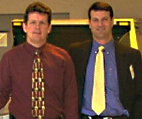
Michael Gee (pictured with Eric Gans, managing director of KPG Australia on right) explains the decision to go thermal as part of the company’s aim to “stay ahead of the game” when it comes to technology.
“We do many different types of work here, including heatset gloss, using different levels of screening and paper. The thermal platesetters give us the quality and the flexibility we need. It’s early days yet, but so far we’ve seen an improvement on the presses with less problems with scratches on the plates and spot on registration every time,” he said.
From almost day one the North Richmond plant has raised the heatset screen ruling from 120 lpi to 130 lpi and the newsprint screens from 100 to 120 lpi.
The results are plain to see in the better quality of the newspapers being produced in the first week, according to Steve Dunwell, Marketing Director, Creo Asia Pacific.
"You can see the results in the publications. The colours are marvellous, the pictures almost jump off the page, the quality is excellent," he said. “This is a very important shift for the newspaper industry in Australia and New Zealand. Thermal technology delivers better quality and more stability on the press as well as the convenience of daylight handling of the plates. I expect to see more newspapers follow Rural Press’ example.”
Creo will be hosting an industry Open House at Rural Press North Richmond on February 18, 2003. If you would like to observe the thermal CTP operation at first hand, contact Mark Wilton, Marketing Manager, Creo Asia Pacific mark_wilton@creo.com
Better chemical usage
Michael Gee cited the savings in chemical usage, daylight handling and cleaning time as contributing factors in the decision to go thermal. The decision was made after a field trip to the Philippines and Singapore to observe Creo Trendsetter NEWS in operation at two newspaper plants there.
“Daylight handling is obviously a very big plus. We didn’t want to build another dark room after getting rid of one in our move to digital. We also use visible light platesetters at our plants in Canberra and Dubbo and clean them every week. With the NEWS we only have to do it once a month. That makes a big difference.”
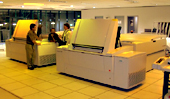 The combined output of the two platesetters (pictured after installation at the North Richmond plant) is 170 per hour, with Kodak picking up the lucrative contract for News plates. Rural Press keeps a stockpile of up to 30,000 plates with KPG maintaining the same again as back up. The plant at North Richmond previously used FujiFilm plates.
Prinergy workflow and Square Spot
Creo workflows will become the DFE for the new platesetters as part of the deal. The company will take advantage of the quiet period in January to make the change over from its current AutoLogic Page Pairing system to the new Prinergy and Prinergy Newsrun system.
Michael Gee is intending to make full use of the Creo SQUAREspot capacity to print using stochastic screening.
The shift to thermal has major ramifications for the plates suppliers involved. Peter Hook of KPG, while obviously elated at gaining the major plate contract, has to balance it against the loss of the film sales. KPG supplies film for the entire Rural Press group.
“On this installation, because it is the first in the country, there was little differential between the prices of the thermal plates and the visible light competitors. We are very pleased to have this site here in addition to the two newspapers in Asia. I’m sure we will see other newspapers in the region make a similar decision.”


 The combined output of the two platesetters (pictured after installation at the North Richmond plant) is 170 per hour, with Kodak picking up the lucrative contract for News plates. Rural Press keeps a stockpile of up to 30,000 plates with KPG maintaining the same again as back up. The plant at North Richmond previously used FujiFilm plates.