


LIA carbon debate heats up the industry
Beset by different carbon schemes, industry sage, James Cryer, piles back into the debate, debunking accepted truths while sowing confusion in the minds of the undecided.
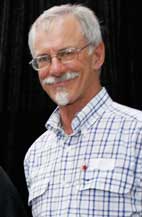 Last week’s LIA meeting at Five Dock in Sydney dealt with the merits of alternate carbon-abatement schemes. It highlighted several things. One is just how gullible human beings are to any new quick-fix scheme. Another is how comical it is to see otherwise intelligent people attempt to reduce the whole complex issue of climate change and carbon emissions down to simplistic devices such as the ‘carbon calculator'.
Then again, with our fixation on carbon, we’re probably chasing the wrong culprit anyway.
But let me backtrack. Humans seem to only want two alternatives. We only see two possibilities for almost everything; republic or monarchy; labor or liberal; tea or coffee? To every problem there seems only two choices!
And so it is with the challenge of pollution.
We’re served up two choices: a trading scheme, which limits the quantity of emissions but allows the price to fluctuate; or the so-called carbon tax, which imposes a price it hopes will reduce the quantity of emissions. Both are Tweedle-dum and Tweedle-dee; a misguided approach based on a false premise. Apart from that they’re perfectly appropriate!
At the LIA meeting, Phil Lawrence, our well-known environmentalist, trod a delicate path between the two proposed systems and managed to deliver a relatively value-free appraisal of both. While interesting, I suspect it’s all a bit academic, as any carbon tax will be the subject of such vigorous lobbying that the compensation payments to such affected industries as coal, steel, LNG, aluminium, cement, etc will far exceed any benefits.
One of Phil’s points was that all activities generate some carbon footprint, no matter how negligible and the practice of polluting then buying offsets is frowned upon. It doesn’t reduce net pollution; it just re-arranges the deck chairs.
So how come a major local paper-supplier is advertising one of its products as having had Life Cycle Assessment (LCA) … and is now carbon neutral? It claims to have undertaken a cradle-to-grave analysis of the entire greenhouse emissions related to its production … as well as emissions associated with other stages of its production. So we assume they interviewed the Russian lumberjacks as to whether the vodka they drank for breakfast came from sustainable potato farms! Yeah, right.
This example illustrates how easy it is to dial up the assessment program that gives you the outcome you’re hoping for. With at least six to pick from you’ve got plenty of choices!
 Last week’s LIA meeting at Five Dock in Sydney dealt with the merits of alternate carbon-abatement schemes. It highlighted several things. One is just how gullible human beings are to any new quick-fix scheme. Another is how comical it is to see otherwise intelligent people attempt to reduce the whole complex issue of climate change and carbon emissions down to simplistic devices such as the ‘carbon calculator'.
 Getting into the carbon calculations
The other speaker was Chris Sewell of Gaia Partnership, who made the point that it is possible to reduce everything to numbers. Much like alchemists believe they can transmute lead to gold, or psychologists believe they can deconstruct personality-types into neat little boxes, so we’re lead to believe we can actually measure the carbon atoms produced by any print job.
But how reliable is such a carbon calculator? With at least six different carbon-emission accreditation systems, it appears you can take your pick as to which one makes you look good! Accepting for a moment the sincerity of the concept, it begs at least four questions that remained un-answered during the presentation.
First: who can test the accuracy of this calculator when gaseous emissions, are by their very nature, hard to quantify? We can’t even get financial auditors to agree – and they’re counting something you can see – money!
Second: I suggest the difference in pollution emissions between the best and the worst printers is miniscule. After all, we all use the same ink, paper and presses. It’s not like one printer is twice as bad as another.
Third; how far do you go in bringing to account various activities in, say, the manufacture of paper? Already we have the three Scope levels, which create an administrative nightmare. Scope 1 are impacts directly related to your own print or paper production; Scope 2 deals with your suppliers and your admin/sales activities (do your reps drive Prius’ – or not?); Scope 3 refers to third-parties such as the suppliers to your suppliers and what they had for breakfast – see Russian lumberjacks, above. The whole world’s going mad!
Fourth – this is the killer-punch. Let’s assume our carbon-calculator has, by some miracle, been able to accurately to take all those factors into account and come up with a number. All it has done is recognise the upstream activities. It hasn’t and can’t anticipate how environmentally friendly the purpose of the printed material was. Say, for example, it scored highly in terms of its eco-friendly production process but was actually junk mail that clogged up peoples’ letterboxes? Or telephone books, which were never read.
Needless to say, our calculator would not be able to take into account all these variables. Such calculators are indicative of our desire to reduce even the most complex issues down to a set of numbers, like the attempts to measure schools’ performance.
Forget trying to measure emissions. The real solution lies in us recognizing the real culprits – pollution, not carbon – and correctly pricing the cost of petrol, water and coal-fired electricity. That way individuals and companies would find ways of reducing pollution tomorrow, without the massive bureaucracy the touted schemes involve.
The LIA meeting was very thought provoking, which raised some interesting issues and questions, most of which remained unanswered due to the inherently vague nature of the whole issue. Ironically, the big polluters may be the ultimate beneficiaries, as they line up to club any proposed scheme to death.
James Cryer,
JDA Print Recruitment.
March, 2011