Longbottom Digital Papers moves to new larger premises – Magazine feature
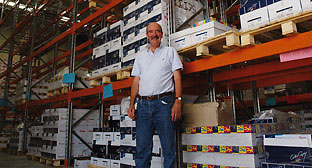 Digital colour production is building up as part of the graphic arts mainstream in 2005, and Colin Longbottom, managing director of Longbottom Digital Papers, is intent on surfing the wave all the way to the top.
Realising that his old premises were no longer sufficient to satisfy increasing demand, Longbottom decided a new location was needed. The new site is located in the Sydney suburb of Padstow, and at approximately 1,000 square metres, is more than double the size of its old premises.
The company expects to grow to take up the extra space within two years, at which point a factory adjoined to the property will allow it to increase its capacity by a further 420 square metres. Longbottom confirms that the move was inspired by growth in digital colour production sector, a trend he expects to soldier on for at least the next several years.
“The digital market is growing, and we need to grow with it,” says Longbottom. “We expect digital to continue growing until it hits a peak in 2008, and we want to be well positioned to take a good share of that.”
The company estimates its turnover will double within 18 months, and points to the solvent wide-format market as a niche that is growing substantially. Longbottom Papers aims to meet this demand with a new range of solvent media, in addition to a fresh supply of substrates for the HP Indigo digital presses.
“We’re engaged in a lot of little niche markets that few of the major suppliers are interested in, but it works fantastically for us.”
It's a long way to the top
Longbottom Digital Papers entered the market for inkjet and other digital media a decade ago, in response to changes in the offset paper market that inspired a search for niche areas that were economically sustainable.
“I could see the offset market losing margins and pulling in lower profits,” says Longbottom. “I think the larger suppliers are their own worst enemies in many cases. They offer rock-bottom prices to try and snag their customers and are then locked into a deal in which they’re not making any profit.”
While the shift to digital media proved to be a struggle for the company initially, it was a move that eventually paid off, with the market for digital colour production particularly strong in the past four years.
“We make more money selling a pallet of digital than a truckload of offset,” says Longbottom.
He says one of the great challenges for those supplying digital media is staying abreast of technologies that are changing so rapidly.
“Offset has been around for ages and has seen few fundamental changes in that time, but half the battle with digital is getting your head around the new technologies and way of doing things that are consistently being developed.”


 Digital colour production is building up as part of the graphic arts mainstream in 2005, and Colin Longbottom, managing director of Longbottom Digital Papers, is intent on surfing the wave all the way to the top.